

Craft and Technology and Music
Learning Outcomes:
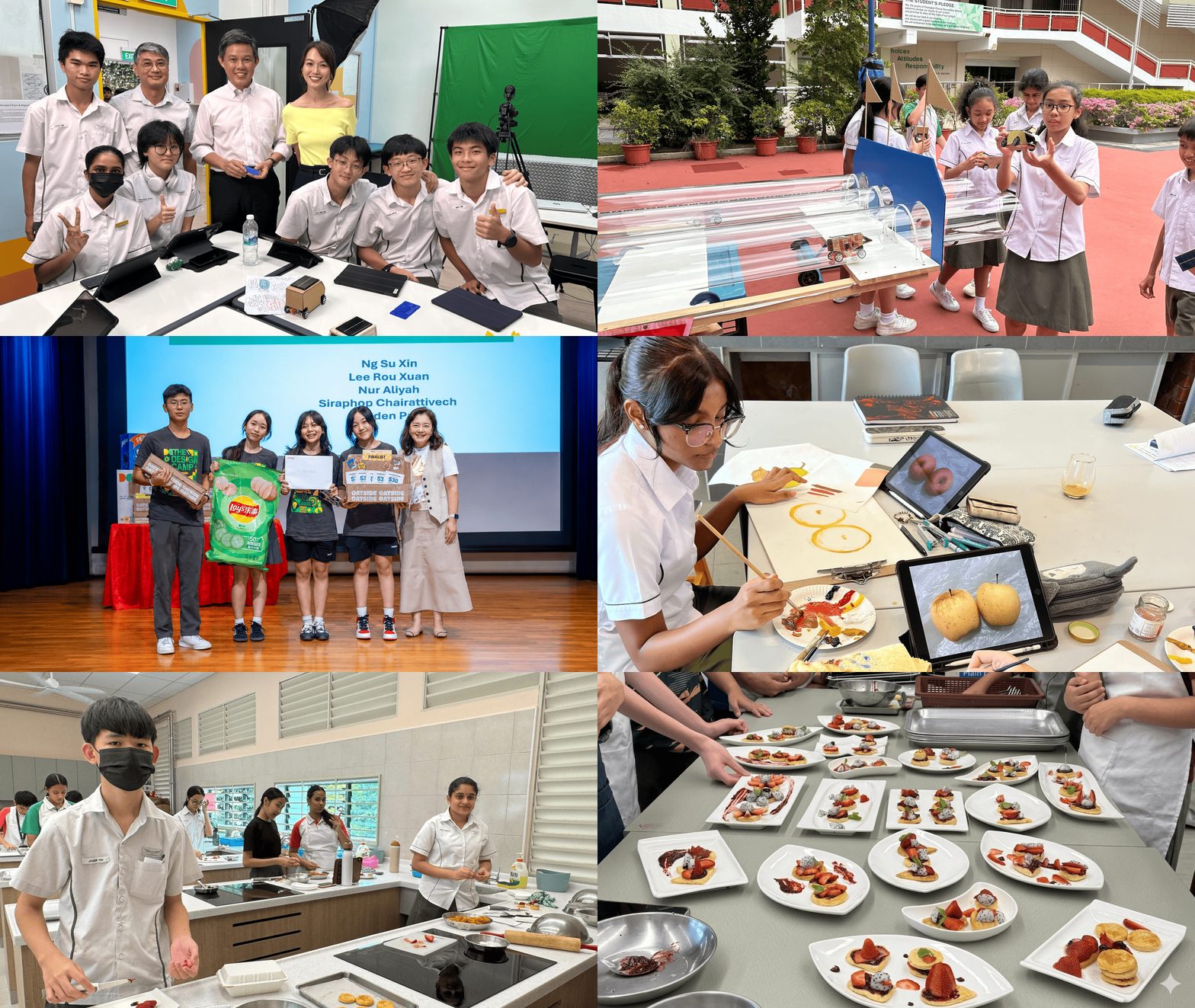
The Craft and Technology Department aims to develop students into creative, critical and adaptive learners who can respond confidently to the demands of a rapidly changing world. Through Design & Technology (D&T), Art, and Nutrition and Food Science (NFS), students engage in authentic, hands-on learning experiences that emphasise thinking, making and reflecting.
The Art unit develops students’ visual literacy, creative expression and artistic dispositions. Through close observation, exploration of media and techniques, and critique of artworks, students learn to interpret, communicate and respond meaningfully to ideas, cultures and contemporary issues. By engaging in research, experimentation, refinement and presentation, Changkateers build creative confidence, critical thinking and the courage to express their unique perspectives.
The D&T unit develops students’ agency and designerly dispositions through a Design Thinking curriculum aligned with the OECD Learning Compass 2030 and Singapore-Cambridge D&T syllabuses. Students learn to identify everyday needs, think critically and creatively using visible thinking routines, and communicate ideas through doodling, sketching and mock-ups. Through empathetic research and prototyping, Changkateers create functional solutions while building resilience, adaptability and technical confidence.
The NFS unit develops students’ knowledge and skills in nutrition, consumer education and sustainability. Through inquiry, practical food preparation and real-world decision-making, students learn to make informed choices about food, health and resources. By applying nutritional understanding and responsible consumer practices, Changkateers build confidence, independence and the ability to adopt sustainable lifestyles.
The Music unit provides a dynamic instructional programme encompassing GarageBand, Soundscape, STOMP, and Ukulele. Students learn to create and perform music in authentic contexts, developing creativity, collaboration, and communication skills. Through music-making, they cultivate 21CC competencies such as critical and inventive thinking, as well as cross-cultural awareness and expression, deepening their appreciation for the relevance and value of music in everyday life and the arts.
Key Programmes:
1. Art
-
Exposure to a variety of Art forms and Media in 2D and 3D forms, art making in analogue and digital platforms, design tasks, digital illustrations and digital drawings.
-
Exposure to Inquiry-Based Learning [IBL] as a key pedagogical approach.
-
Visual Analysis of artists and their works
-
Collaborative Art Making and Learning
-
Art Journaling and Sketch booking
-
Experiential learning outside classroom
2. Design & Technology
-
Design and making through a design thinking approach, supported by research, prototyping, and testing
-
Digital sketching and 3D modelling software for visualisation and coursework
-
Application of structures, mechanisms, and electronics in design and prototyping tasks
-
Sustainability-focused projects, including solar car design
3. Nutrition and Food Science
-
Experiential learning through food science investigations and practical experiments
-
Collaborative learning through food preparation activities using a range of cooking methods
-
Inquiry-based learning to explore issues related to nutrition, food choices, sustainability and consumer decision-making
-
Development of coursework skills through progressive hands-on tasks in both Lower and Upper Secondary
4. Music
-
Performing Arts-Based Learning (PABL). Through PABL, students are exposed to drama, music, and movement, creating engaging and meaningful learning experiences.
-
Changkat Groove (Jamming Group). A vibrant community of music enthusiasts, Changkat Groove brings together students to perform as a pop band. Through regular jam sessions and performances, members collaborate, express their creativity, and develop their musical talents, confidence and teamwork skills.